What coffee taught me about building products?


You have probably been asked about your hobbies at some point. I never had a good answer to that question. Tbh, I still don't.
A few years ago, while reading Designing Your Life, I realised something slightly uncomfortable. I did very little just for joy. Most things I spent time on had a reason behind them. They were related to work, making money or getting better at something.
So I started doing something new on weekends. I wasn't looking for a hobby. I just wanted to find things that interested me. Some things stayed. Some didn't. Coffee did. I got into it because I didn't like tea. My sibling introduced me to coffee and initially I had the same reaction most people do: Who's drinking that stupid bitter black water?
I do today.

Three years ago, I started with normal Nescafé. Since then, I have explored around 82 coffee drinks in first year, started making different coffee concoctions, got interested in brewing next year, then later went to Japan and came back wanting to explore coffee even more. It made me set up a small coffee setup at home (now there's no going back).
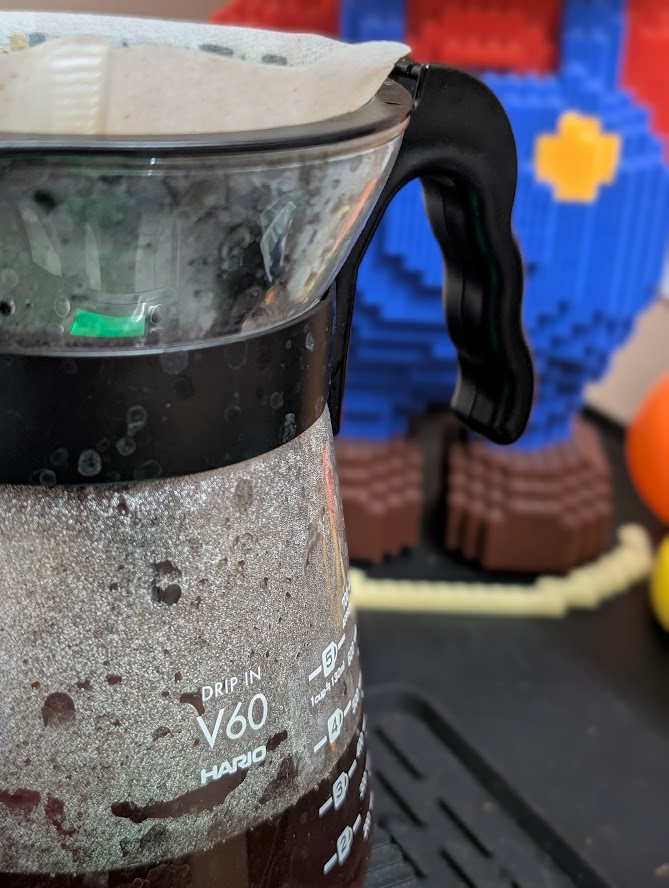
The interesting thing is that I never set out to learn coffee. I just kept finding something new in it. And that has made me think about how we learn and build products.
Curiosity works better when you don't have to force it
In tech, curiosity is almost part of the job description. Things change constantly. New technology, new products, new ideas. You're expected to keep learning. The problem is that work often gives curiosity a job too. What can I learn from this? How can I use it? Will this help me get better at something? Those aren't bad questions. But when everything needs to lead somewhere, exploration starts feeling like work.
Coffee didn't. I went from trying different drinks to making them. Then brewing became interesting. Then Japanese coffee shops introduced me to something else. Every time I thought I had explored enough, there was another thing.
That is probably what I want more of when building products too. Not learning just to fill a knowledge gap, but being interested enough to keep asking, what's this?
Some of the better product ideas I've had didn't come from sitting down and deciding I needed an idea. They came from noticing something, exploring it and following it for a while. Coffee reminded me that curiosity doesn't always need a roadmap. Sometimes, following something interesting is enough.
You can't build taste without seeing enough things
When I started drinking coffee, coffee was coffee. Black coffee was bitter. That was the review. Then I tried more. Slowly, I started noticing differences. Some coffees tasted better. Some were interesting. Some weren't. Eventually, I started noticing sweetness in black coffee, which my earlier self would have considered ridiculous.
The important change wasn't that I learned more coffee facts. I started developing taste. I could tell that I liked something, and then slowly started figuring out why.
I think product people need this too. You can learn principles about good design, usability or product experiences. But at some point, you need to see enough things to build your own judgement. This looks good isn't enough. Why does it work? This feels confusing isn't enough either. What exactly is making it confusing?
Trying to explain coffee forced me to notice before judging. You need patience for that (and I am the opposite character). You can't immediately decide what you're tasting. You sit with it for a while and try to understand what you're actually experiencing.
I see something similar when things go wrong in products. When a demo breaks or a release behaves differently, the easiest thing is to react immediately. Panic is especially good at making people look busy while seeing absolutely nothing useful. Sometimes the better response is to stop and observe. What actually happened? What changed? What are we missing?
Coffee isn't teaching me how to handle broken features, but it improved my comfort in spending time noticing before deciding without going into panic.
Eventually, I started judging cafes differently
This became clearer when I started exploring cafes. Initially, a cafe was just where I went to get coffee. After visiting enough of them, I started noticing different kinds of experiences.
- There are the Instagram cafés. Fancy, loud and designed to get your attention. Every corner wants to be photographed. I usually don't like them.
- Then there are cafés where the people running them clearly know a lot. If you talk to them, they show off. But sometimes, their knowledge hasn't translated into the experience yet. The place is aesthetic, but something doesn't match. Everything individually looks right. Together, it doesn't. They got the worst coffee in a super cool-looking cup.
- Then there are the ones I keep going back to. The coffee, colours, space and aesthetics work together. Nothing feels unnecessarily vibrant. Nothing constantly asks for attention.
The best ones leave your thoughts alone. You can walk in thinking about something and continue thinking about it. The colours don't poke you. The space doesn't compete with you. The café has a personality, but it doesn't keep forcing you to notice it.
At some point, I stopped asking, Is this café good? I started asking, What exactly is making this work? That, I think is another thing that happens when you explore something long enough. You start building your own way of judging it. You develop taste, but you also develop a way of seeing.
For me, I started looking at the experience as a whole. What works together? What feels disconnected? What gets in the way? What is asking for attention when it doesn't need to?
And without really realising it, I was starting to use the same instinct when looking at products or delivering releases. The thing itself was different, but somewhere underneath, the questions were converging. For me, that common thing became experience. For you, it might be something else.
Products are more than the things inside them
This is probably the strongest model I carried from cafes into products.
A cafe can have good coffee, beautiful furniture and nice colours. It can have an owner who knows everything about coffee. Yet the experience can still feel wrong. Everything individually can be good. The whole thing doesn't have to be.
Products are not very different. A feature can be good. The interface can look good. The copy can be good. The information can be useful. The product can still be bad.
Do these things actually work together? Does the aesthetic support what the user is trying to do? Has the team understood the problem but failed to translate that understanding into what the user actually experiences?
I see this in releases too. Sometimes every decision made while building something makes sense individually. You can explain why the feature works this way, why the copy was written this way or why an interaction exists. Then you use the whole thing and something still feels off.
The problem isn't always one thing. Sometimes it's in how all the things came together.
That is probably the question I carried most from cafes into products: What exactly is making this work? And sometimes, what exactly is stopping it from working? This question gives a lot of answers.
Attention is not the same as engagement
One thing I keep thinking about from cafes is attention.
The cafes I like the most aren't empty or boring. They have thought well about lighting, cups, colours, furniture, coffee and space. But none of those things are screaming at me, like warm lights exactly in the right spot where they should be and not into my eyes. They know when to get out of the way. All this together tells you that your cup of coffee was made with "care".
Products often struggle with this. We want users to engage, so we make something more visible. Then something else also needs attention, so we highlight that too. Add a badge here. Make this brighter. Add another CTA. Show the user you care, they'll find it themselves.
I think about this even when presenting text in a product. How do you keep someone engaged without constantly poking them? How much can you highlight before the highlighting itself becomes noise? A good experience doesn't always need more attention. Sometimes it needs less interference.
The cafes I like don't disappear. You still notice the thought behind them. They just don't interrupt your experience to prove that they exist. I think good products can do the same. The ones that can fade in their daily flow. They help you do what you came to do without constantly making you deal with the product itself.
Maybe products need ideas from outside products
I still don't know if coffee is my hobby. I don't particularly care anymore. It side effects just help me with a lot of other spectrums, so I continue with it.
What started as doing something new on weekends became three years of exploring something because I kept finding it fascinating. Somewhere in that process, I became more curious, more observant and more opinionated about experiences. I developed a way of judging things without consciously trying to build one. Then those things started showing up in how I think about products.
I don't think the lesson here is that everyone building products should start drinking coffee. That would be a terrible conclusion for tea people. But I do think spending time with something outside your work gives you another place to build judgement. You see enough examples. You develop taste. You start noticing patterns. You slowly build your own way of seeing things.
And sometimes, when you're stuck looking at a product problem, that way of seeing gives you a question you wouldn't have asked otherwise. For me, coffee gave me a lot of those questions.
The biggest one is probably still the simplest: What exactly is making this work?


